
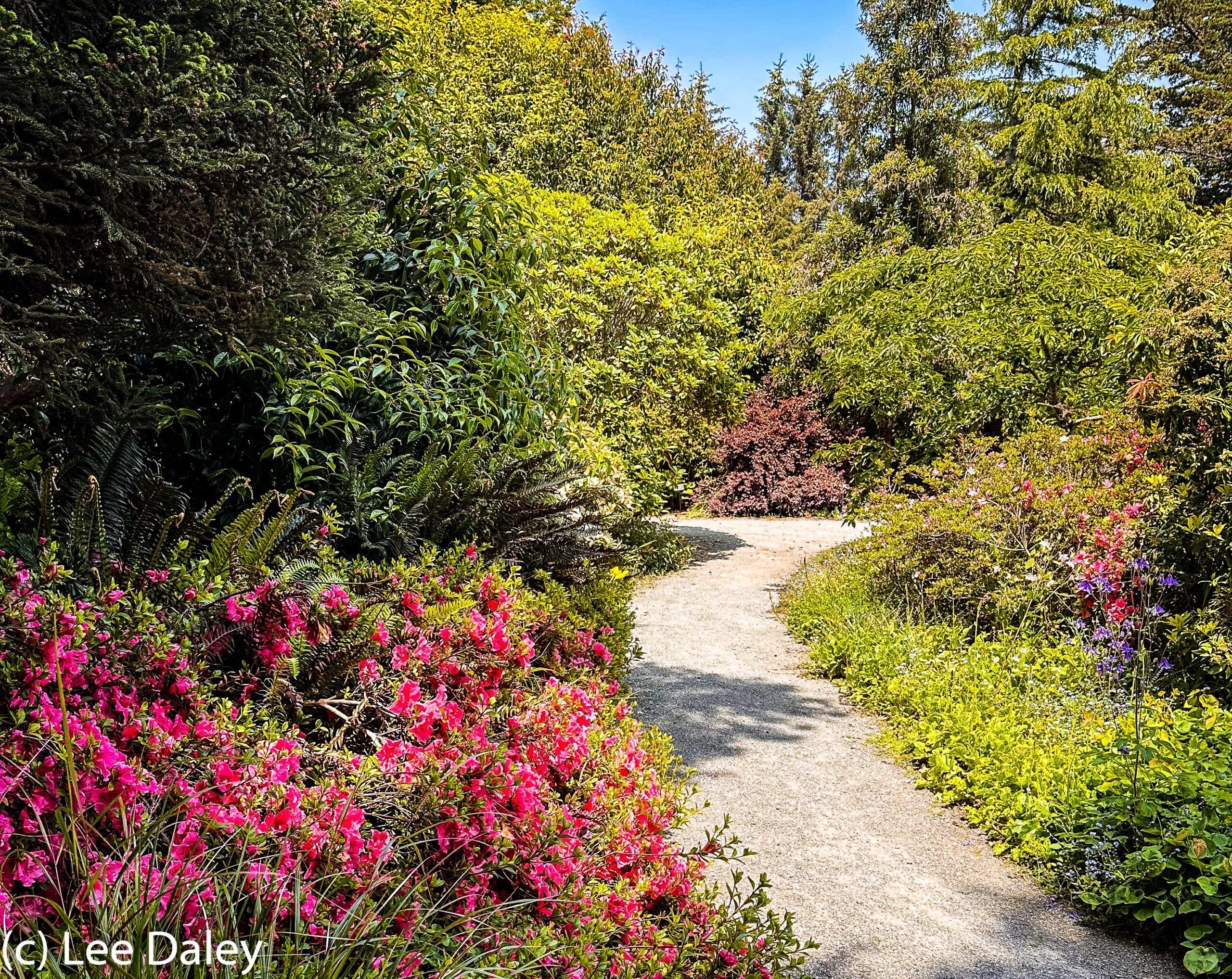
Story and Photos by Lee Daley. Updated December, 2025. When traveling solo or with just one friend, I love to plot out time to refresh in a local public garden, whether large or small. On a recent getaway to Mendocino, I felt incredibly fortunate to immerse myself in the Mendocino Coast Botanical Gardens. My timing could not have been better. The rhododendrons and azaleas were in stunning full bloom, while an array of artistic sculptures scattered throughout the grounds highlighted our stroll to the seashore.
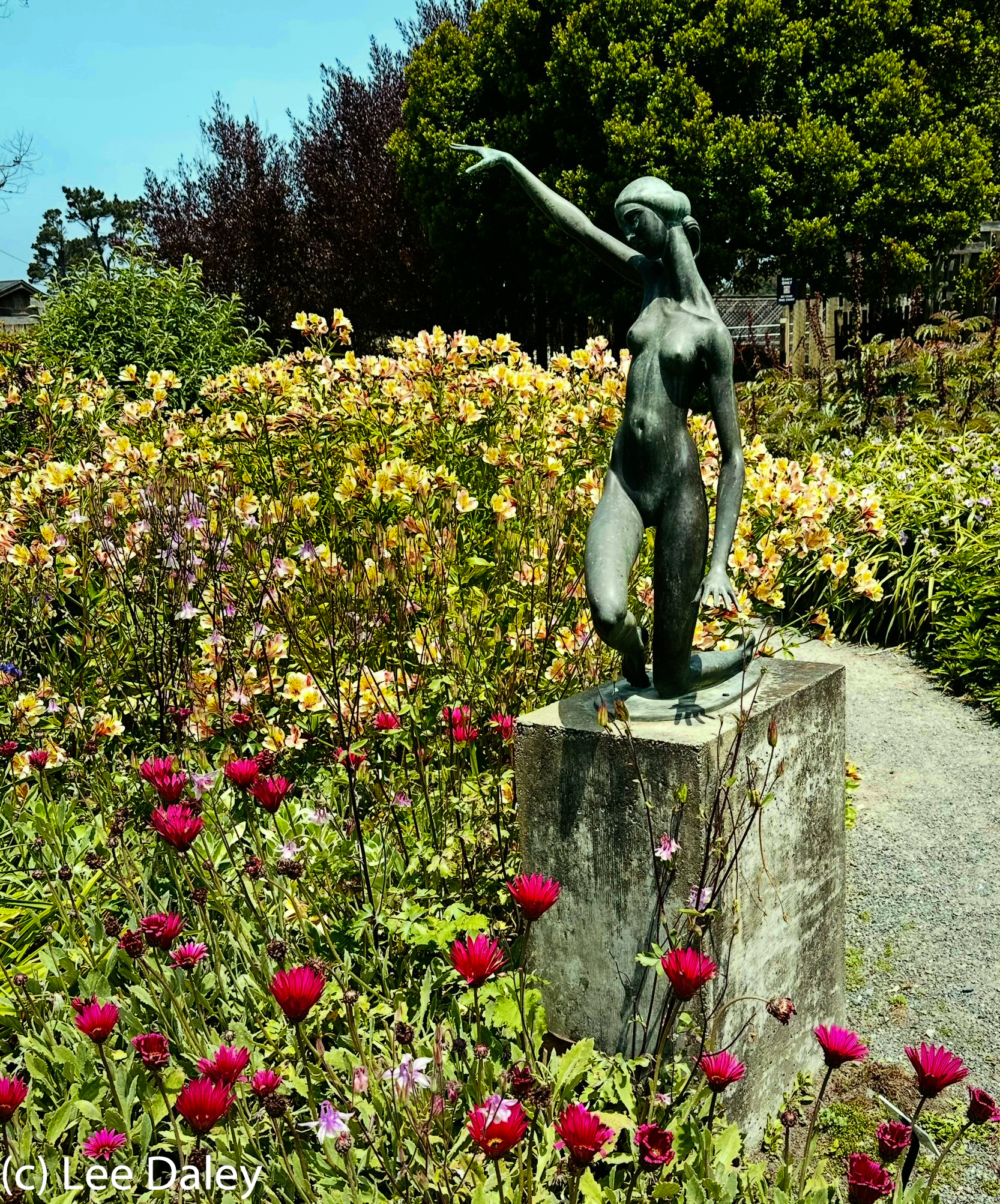
Pointing to the path that leads to the ocean, this lovely sculpture showcases the beauty of the landscape.
Feeling totally immersed, we stopped to create memories, photographing favorite views of the individual corners where flora from native species to exotic cultivars thrive at every bend. Here, just one of many sculptures scattered throughout blends natural art with that of one created by a local artist.
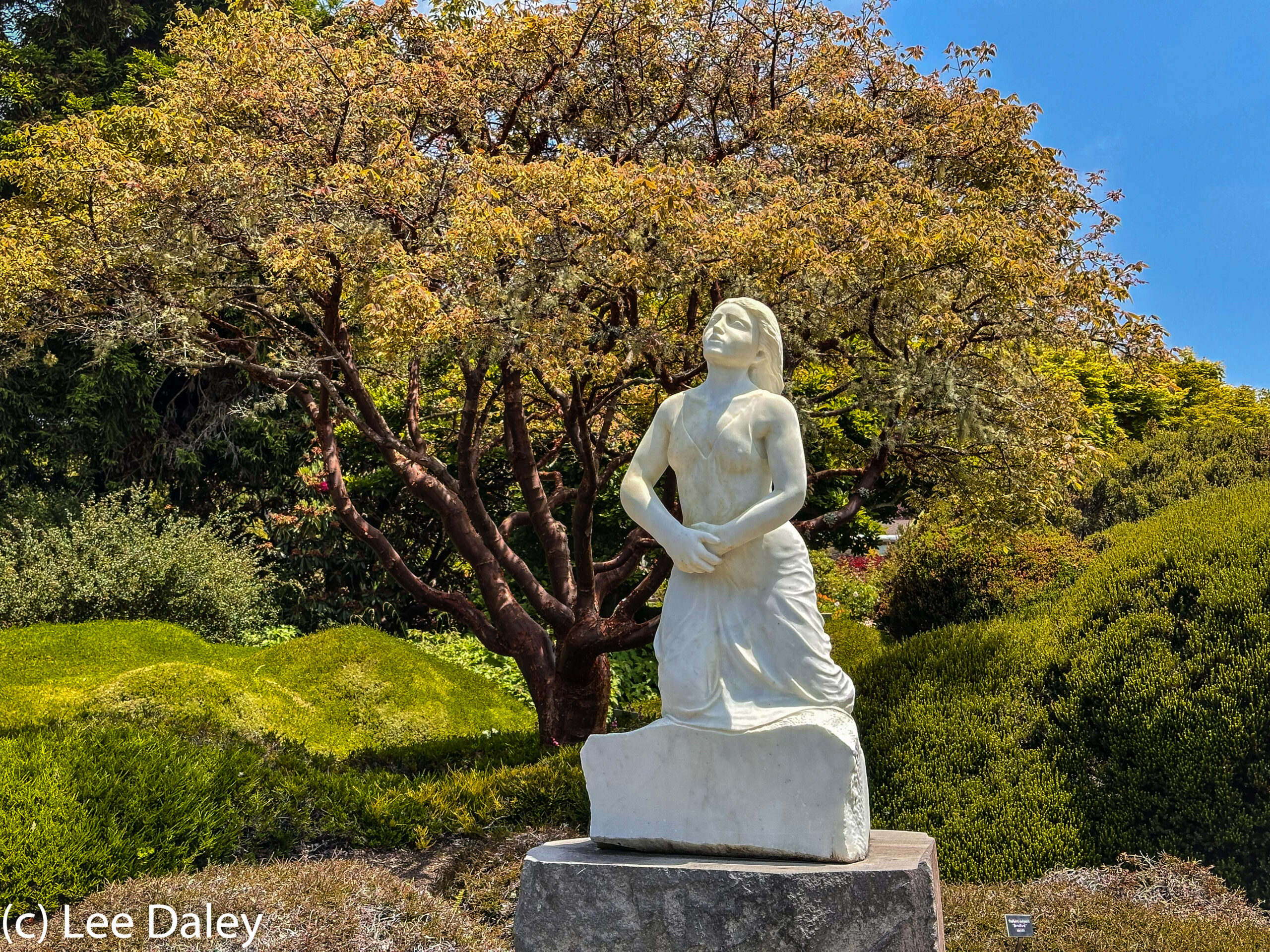
Marble and Stone Sculpture, “Prayer” by John Fisher.
Our walk was enhanced not only by the natural beauty around us but by the winding paths and footbridges that wander along, eventually taking us to the cliffs above the shores of Glass Beach with its stunning panoramic views.
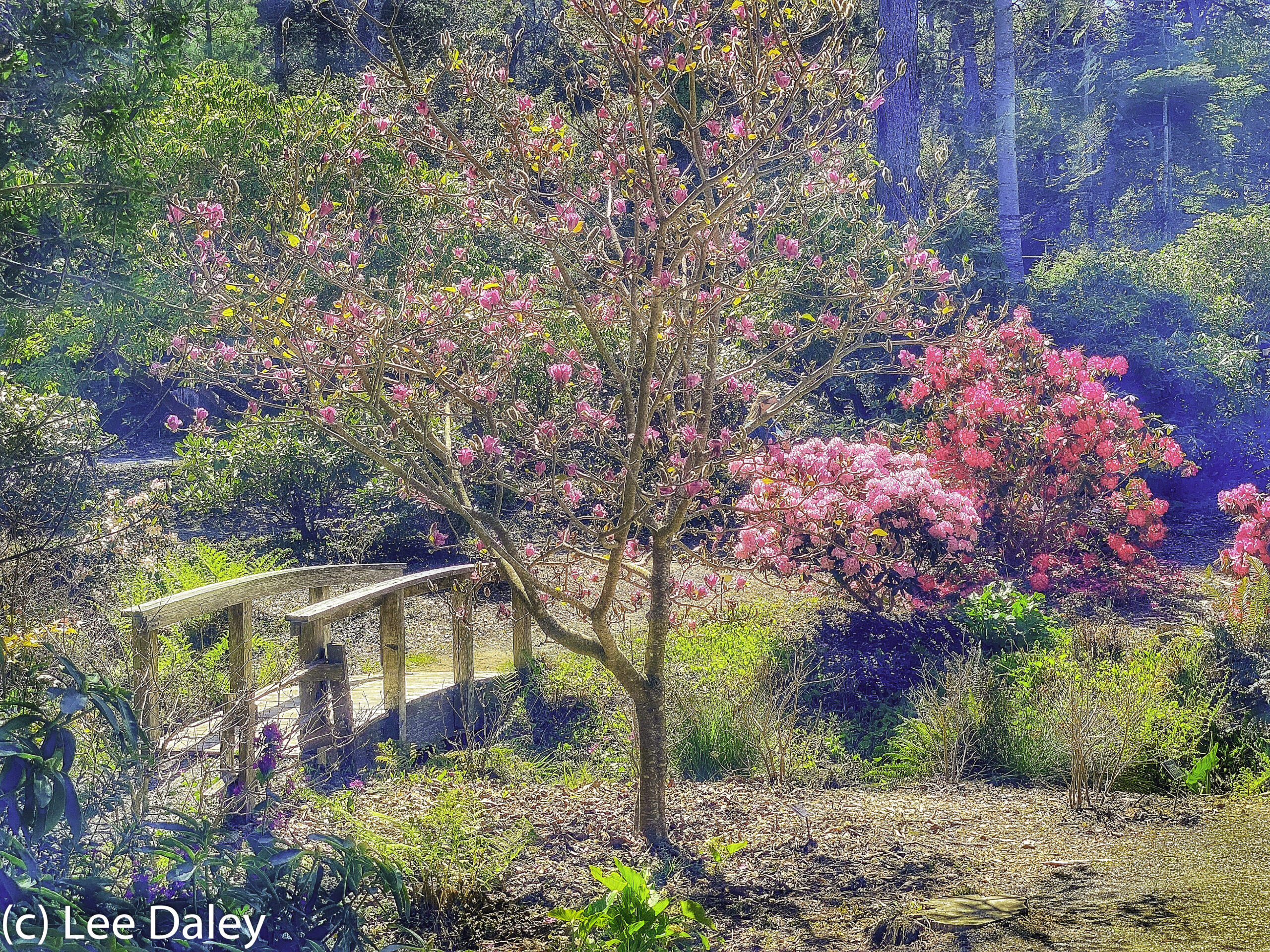
Several footbridges in the Mendocino Coastal Botanical Gardens line the path leading to the ocean.
As we wandered, stopping occasionally to reflect and to frame photos, we were greeted by another sculpture that seemed to epitomize the wisdom of taking time to forget the challenges we all face and remembering to unwind. Here, the Wisdom Owl, peacefully ensconced in a shady glen, looks out peacefully at all who pass.
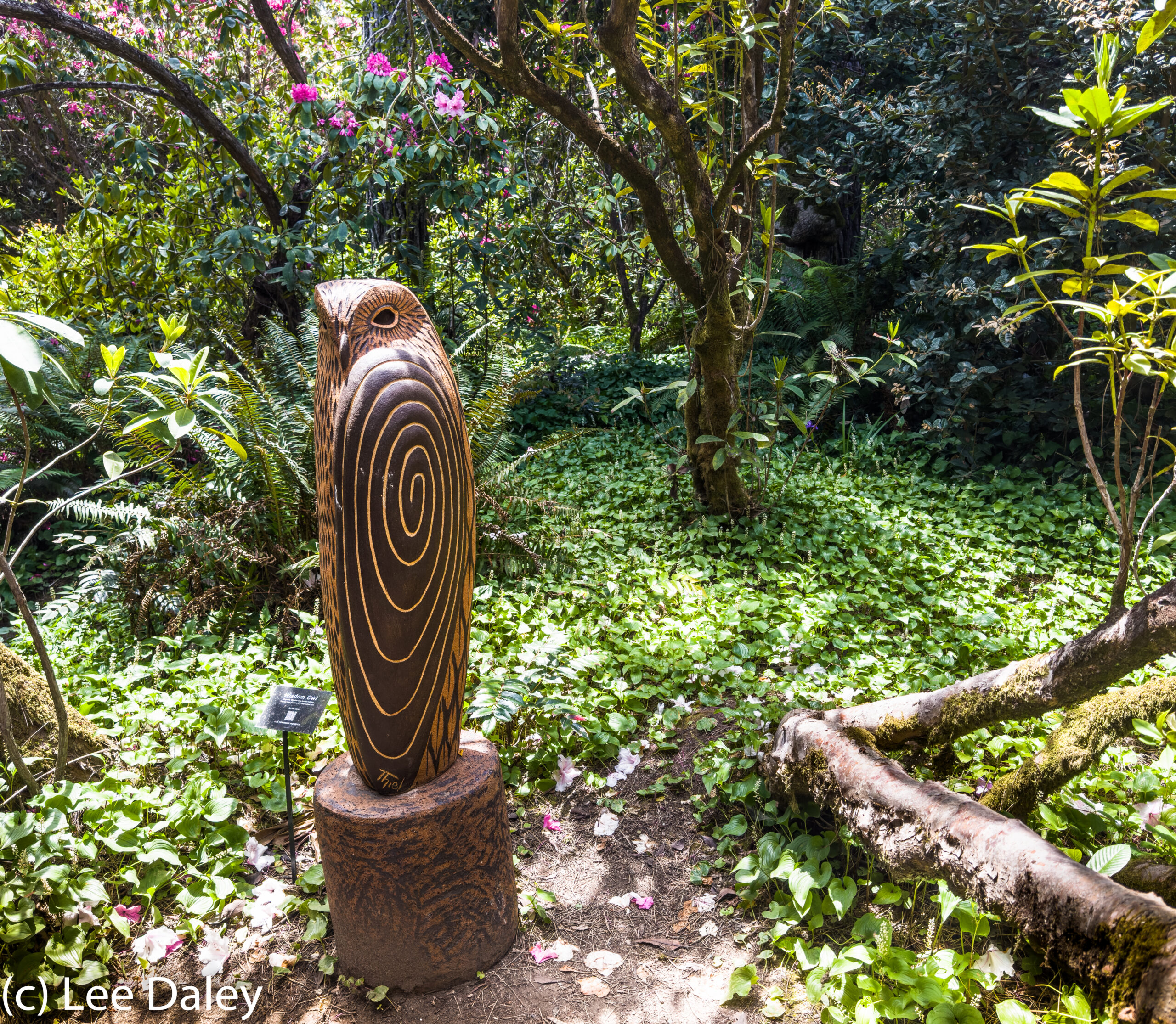
“Wisdom Owl” greets visitors as they walk to the ocean at the end of the trail. Sculpture by Clayton Theil Sculptures.
Soon, our wanderings rewarded us with a refreshing sea breeze and a phantasmagorical view of the horizon beyond as waves cascaded onto the shores of Glass Beach. A cliff-side bench greeted our arrival, welcoming us to enjoy views of cruising whales, crashing surf, and cartwheeling seabirds.
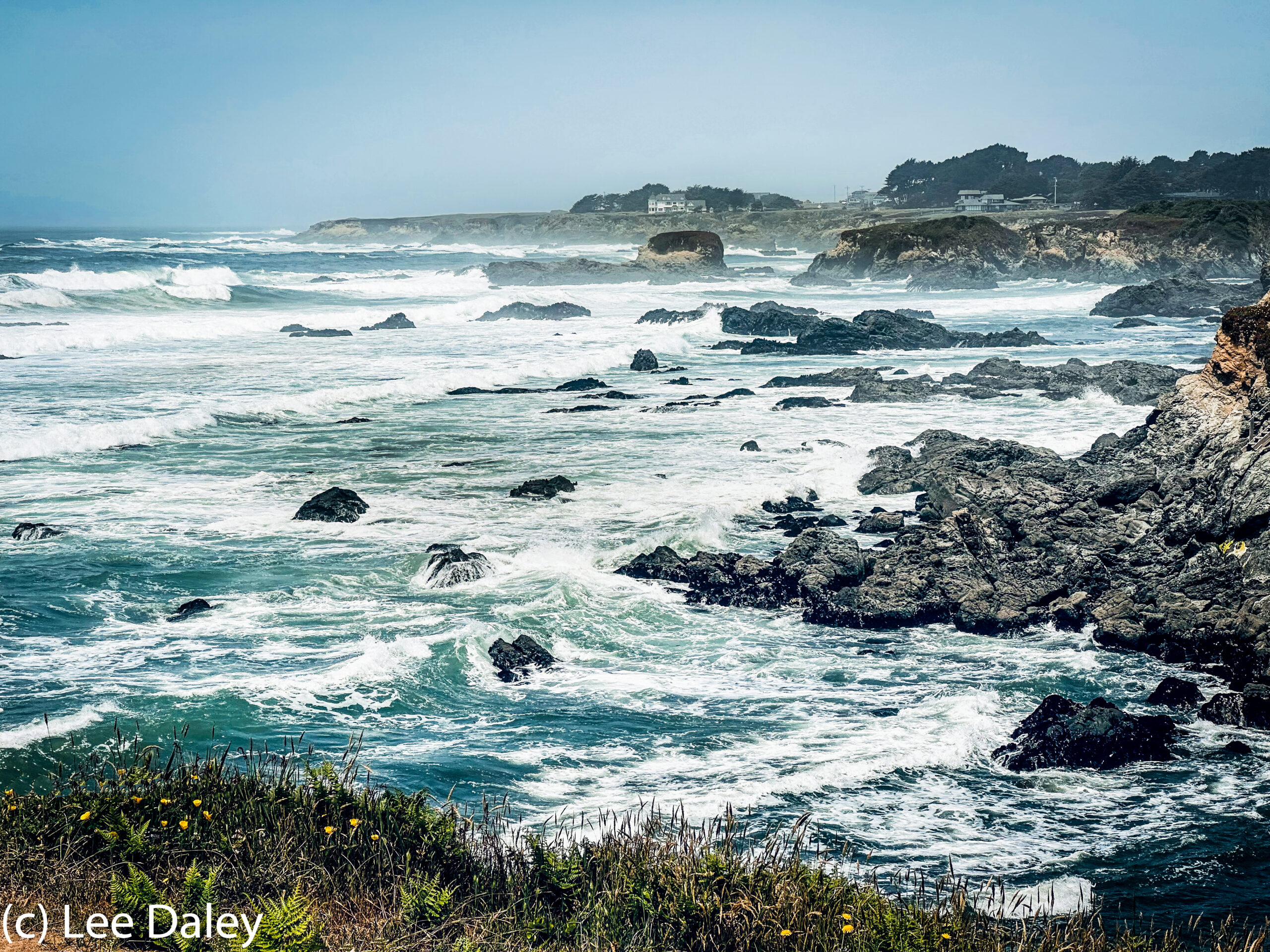
Glass Beach rewards visitors who reach its shores from the Mendocino Coastal Gardens trail.
Not just a feast for the eyes, the Gardens also provide an array of horticultural education, as well as creative ways to connect with the natural world and practice environmental stewardship. Every season warrants a visit to the nearby town of Mendocino and the Mendocino Coastal Gardens.
Where to Stay: One of my very favorite places to stay when visiting Mendocino and the botanical gardens is the nearby Little River Inn with its ocean views. Here is where you can enjoy breakfast in the comfort of your room, perhaps by the fireplace or on your deck. Be sure to succumb to Ole’s Swedish Hotcakes and the Ollalieberry Cobbler. Overseen by fifth-generation owner Cally Dym, Little River Inn recently celebrated its 80th anniversary on the Mendocino Coast. Contact below.

With a view of the sea and a fireplace to warm your toes, the Alice Abbot Suite at the Little River Inn beckons.
Best time to visit: The glory of wildflowers in bloom come Spring precedes the glorious floral extravagance of summer and fall.. In the entire Mendocino area, romance abounds year-round but nothing exceeds cuddling next to a warm fireplace on a winter evening while listening to the sound of waves crash against the ocean-side cliffs. Each season brings its own rewards on this magnificent coast.
From the Mendocino Gardens website: The Gardens has become a haven for bird watchers with the list of bird species now at more than 180. It’s rare to spot a red-throated loon or double-crested cormorant in spring, but in summer they are common, as are the black oystercatcher, which frequents the rocky coastline year-round. Ospreys, hawks, sandpipers, plovers, swallows, and Canada geese are also regulars. If you’re vigilant and look carefully, on very rare occasions you might even spot an ash-throated flycatcher, a Savannah sparrow, a Pileated woodpecker, or a red-breasted nuthatch.
Here are a few favorites in the Gardens:
-
Hummingbirds: Two species of these nectar-sipping acrobats are common among the flowering plants. Anna’s, which is resident all year, and Allen’s, which arrives in early spring and departs in early fall, after breeding. Anna’s hummingbird shows iridescent red-violet on the crown and throat. Allen’s flashes a red-orange throat patch.
White Crowned Sparrow: One subspecies of this seed-eater is a year-round resident in the coastal zone. As adults, their crowns all show broad black stripes on a white background. In their first year, these stripes are reddish-brown on a buffy background. This sparrow is also abundant in coastal scrub.
Chestnut-backed Chickadee: This chickadee frequents coastal pine forests from Alaska to Southern California gleaning insects from trunks and branches with its short, pointed bill. It is a year-round resident here. Like all chickadees it has a dark crown and throat patch and a white cheek patch, but it is the only chickadee with chestnut coloration on the back and the flanks.
Wilson’s Warbler: Bright yellow underneath, greenish above, with a glossy black cap (brighter in the male), this warbler is a summer resident and breeder, nesting on the ground. Like most warblers, it is primarily an insect-eater; it does a great deal of “fly catching” rather than gleaning.
Osprey: This large fish-eating hawk can be seen and heard in spring and summer as it flies from nest to ocean and back. The osprey is one of the most widely distributed birds, being found even in Australia. Its body plumage is dark above and white below; the head is primarily white, with speckling on the crown and a heavy dark line through the eye and cheek. It flies with its wings arched and can often be seen carrying a fish in its talons.
Common Raven: There are no crows on the Mendocino Coast, making identification of large all-black birds easy. The common raven is the largest member of the order of perching birds in North America. Like gulls, it is an omnivorous scavenger which adapts well to human civilization.
Pelagic Cormorant: Of the three species of cormorant found locally, the pelagic cormorant is the only one that nests on rocks off the shore of the Gardens; Brandt’s and double-crested may also be seen roosting on the rocks, in the water, or flying by. Cormorants are long-necked, long dark-bodied diving birds. The pelagic cormorant is the smallest of the three, and is most easily identified in spring and summer when it wears white flank patches.
The Gardens also offers: Beginning Birding Walks: 1st Saturday of every month at 9:00 AM. No walks in August or September. Early Bird Walks: 3rd Wednesday or every month. 8:00AM from April through October,
Mendocino Coastal Botanical Gardens.18220 North Highway 1, Fort Bragg, CA 95437. info@gardenbythesea.org
Little River Inn, Mendocino, CA: https://www.littleriverinn.com/ Toll Free: 1-888-INN-LOVE or 1 (707) 329-3302. Food and wine festivals, live music, special event trains –


2 Comments
What a lovely story and a way to unwind. Nature and horticulture are in our backyard, yet it is so easy to forget to take advantage of the refreshing natural escape you so nicely describe.
What a lovely story and a way to unwind. Nature and horticulture are in our backyard, yet it is so easy to forget to take advantage of the refreshing natural escape you so nicely describe. I love the Wisdom Owl photo!